Short-Term Rental Insurance in California: Airbnb and Beyond
Short-term rental insurance in California: what Airbnb and VRBO hosts really need
If you rent out your home, a spare room, or a vacation property on Airbnb, VRBO, or any other platform, short-term rental insurance in California is one of the most overlooked protections you can carry. Standard homeowners policies were written long before the sharing economy existed, and most of them explicitly exclude or sharply limit coverage the moment a paying guest walks through your door. One bad claim, whether a guest injury, a fire, or a theft, can leave you on the hook for tens of thousands of dollars if you are relying on the wrong policy. This post covers what coverage you need, what the platforms actually provide, and how California law shapes your options.
Why a standard homeowners policy falls short for short-term rentals
Most California homeowners policies include a business-use exclusion. When you collect money to let someone stay in your home, insurers can argue you are operating a business on the premises. That single clause can void your liability coverage, your personal property coverage, and even your dwelling coverage for a loss that occurs during a guest's stay.
The California Department of Insurance allows carriers to deny claims under these exclusions, and they do. Common scenarios where a standard policy breaks down include:
- Guest injuries: a renter slips on a wet tile floor and files a bodily injury claim against you.
- Guest-caused damage: a guest leaves a candle burning and starts a fire that damages your kitchen.
- Theft by guests: a renter steals jewelry or electronics; personal theft by a paying guest is excluded under many policies.
- Loss of rental income: your unit is damaged and uninhabitable for six weeks; a homeowners policy won't replace that booking revenue.
If your property is used exclusively as a rental and you don't live there, a homeowners policy is the wrong product from the start. You would need a rental dwelling policy or a purpose-built short-term rental product instead.
What Airbnb and VRBO host protection actually covers (and what it doesn't)
Both major platforms offer some form of host protection, and it's worth understanding exactly what you get before you rely on it.
Airbnb AirCover for Hosts
Airbnb's AirCover program provides up to $3 million in damage protection and up to $1 million in liability coverage for covered incidents during a booking. That sounds generous, and in straightforward cases it can pay out. But there are real gaps:
- It is not insurance. It is a guarantee backed by Airbnb, not a licensed insurance policy regulated by the California Department of Insurance. You have no independent right of action if Airbnb disputes the claim.
- Prior or pre-existing damage: Airbnb can deny damage claims if they determine the damage predates the booking.
- Cash and securities: not covered.
- Vehicles on the property: generally excluded.
- High-value art or collectibles: limited or excluded without documentation.
- Loss of income from platform removal: if Airbnb suspends your listing, that income stops, and their program does not cover it.
VRBO Host Protection Insurance
VRBO offers a liability program through a third-party insurer that provides up to $1 million per occurrence in primary liability coverage. It activates automatically for stays booked through the platform. Property damage protection on VRBO is much thinner than Airbnb's, though, and hosts are largely on their own for structural or contents losses beyond a security deposit.
Platform protections are a supplement, not a replacement. A dedicated short-term rental insurance policy fills the gaps.
Types of coverage to look for in a short-term rental insurance policy
When you shop for short-term rental insurance in California , look for a policy that specifically addresses hosted stays. Coverages to evaluate include:
- Dwelling/structure coverage: pays to repair or rebuild the structure itself if a guest causes damage or a covered peril such as fire or water damage occurs during a rental period.
- Personal property coverage: covers your furniture, appliances, and belongings inside the unit, even during guest occupancy.
- Liability coverage: pays legal and medical costs if a guest is injured on your property and sues you. Look for at least $500,000 , and consider whether you need more given California's litigation environment.
- Loss of rental income: if the property becomes uninhabitable due to a covered loss, this pays the nightly rate or monthly rental value you lose while repairs happen.
- Medical payments to others: a smaller, no-fault coverage (typically $1,000-$10,000 ) that pays a guest's medical bills without requiring a liability suit.
- Theft by guests: explicitly covers items stolen during a booking period, which standard homeowners policies often exclude.
Some carriers in California now offer endorsements you can add to an existing homeowners or landlord policy to activate short-term rental coverage only on days when you have bookings. Others require a standalone policy, especially for properties rented out more than a certain number of days per year. Often 30 to 60 days is the threshold where endorsements stop being available.
California-specific risks that affect your coverage needs
California's geography creates several risks that directly affect how you should structure your short-term rental coverage.
Wildfire exposure
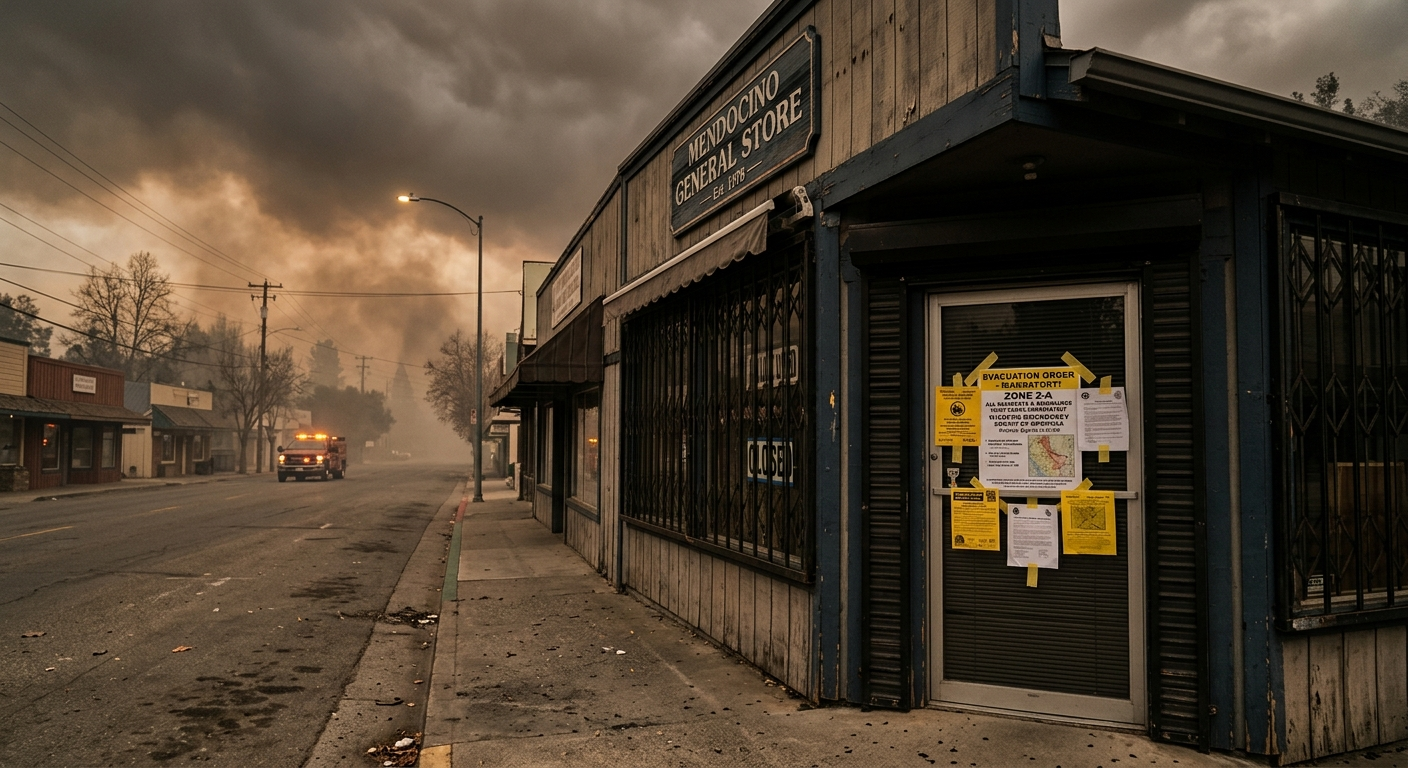
If your rental property is in the Bay Area hills, the Sierra Nevada foothills, or anywhere in a Cal Fire Responsibility Area, wildfire risk is a real underwriting concern. Many standard carriers have pulled back from writing new fire-zone policies, and getting adequate dwelling coverage can require a surplus lines insurer or California FAIR Plan placement. If you are already managing California wildfire risk on your homeowners policy, make sure any short-term rental endorsement or standalone policy carries the same dwelling limits and that those limits reflect today's construction costs, which have risen sharply since 2020.
Earthquake exposure
Standard policies, including most short-term rental policies, exclude earthquake damage. California is seismically active, and a rental property in the East Bay (near the Hayward Fault), the San Francisco Peninsula, or anywhere along the Coast Ranges has real exposure. A separate earthquake policy through the California Earthquake Authority (CEA) or a private carrier is worth serious consideration. Losses from earthquake during a guest stay will not be covered without it.
Flood risk
Flood is excluded from almost every property policy by default. If your rental is near the Delta, low-lying parts of Livermore or Fremont, or anywhere that experiences atmospheric river flooding, a separate flood policy through FEMA's National Flood Insurance Program (NFIP) or a private carrier fills that gap.
Local STR ordinances
Alameda County and many East Bay cities have adopted short-term rental ordinances that require hosts to register, limit the number of rental nights per year, or prohibit whole-unit rentals when the owner is not present. Violating these ordinances can give an insurer grounds to deny a claim. Before you purchase a policy, confirm that your rental operation complies with local rules. In Pleasanton, San Ramon, Oakland, and other nearby cities, the requirements vary significantly.
Landlord insurance vs. short-term rental insurance: knowing the difference
These two products are often confused, and picking the wrong one can leave real gaps. A landlord insurance policy(also called a dwelling fire policy) is designed for properties rented on long-term leases, typically six months or longer. It prices the risk on the assumption that a screened, stable tenant is living there continuously.
Short-term rental insurance is priced on a different risk profile: higher guest turnover, unknown occupants, more frequent vacancy between bookings, and the liability exposure that comes with essentially operating a hospitality business. Some insurers treat properties rented for more than 30 days at a stretch as closer to a traditional landlord risk and will write a standard landlord policy with an STR endorsement. Others draw a hard line and require a purpose-built product for any listing on a hosting platform.
If you mix uses, living in the property most of the year and renting it out for a few weeks during a festival season or the summer, the product that fits is different again. In that case, you may be able to stay on a homeowners policy with a home-sharing endorsement, provided your carrier offers one and you are below their day-count threshold.
These distinctions matter because an improperly classified policy can be voided at claim time. The details in our California landlord insurance guide cover the long-term rental side in depth if you need that comparison.
How much does short-term rental insurance cost in California?
Costs vary widely depending on property location, construction type, coverage limits, and how many days per year the property is rented. Rough benchmarks for California hosts:
- Home-sharing endorsement on a homeowners policy: typically adds $50-$200 per year for limited additional coverage during hosted stays.
- Standalone short-term rental policy for a single-family home: often runs $1,500-$3,500 per year depending on location and limits, though fire-zone properties in high-risk areas can run significantly higher.
- Condo or townhouse STR coverage: generally lower, often in the $800-$2,000 range , since the HOA's master policy covers the building shell.
These are general ranges, not quotes. The only way to get an accurate number for your specific property is to work with an agent who can compare multiple carriers side by side.
Get the right coverage for your rental property with Charles Katz Insurance
Short-term rental insurance in California is not a one-size-fits-all product. The right coverage depends on how you use the property, where it is located, what the platform provides, and what your local ordinances require. Getting it wrong means either paying for coverage that won't apply, or learning you had the wrong policy after a claim is already denied.
Charles Katz Insurance is an independent agency serving homeowners, landlords, and short-term rental hosts throughout the East Bay and beyond. Because we work with multiple carriers rather than a single company, we can compare options across the market and find coverage that fits your situation. That includes matching the right STR product to your property type, layering in earthquake or flood coverage where it makes sense, and making sure your policy doesn't carry the gaps that platform protection programs leave behind.
Call us at 925-484-5900 or reach out through our contact page to get a short-term rental insurance review for your California property.
Get A Quote
At Charles Katz Insurance, securing your future is easy. Ready to protect what matters? Contact us for a quick quote and personalized insurance options!
Kelly
Speak to Kelly 24/7
Microphone ready
Start your custom insurance quote
Instant answers to your insurance questions
Schedule appointments or follow-ups
Personal Insurance
From auto and homeowners to renters and umbrella policies, we help protect your family and property. Let’s find coverage that fits your life.
Commercial Insurance
We customize policies for your industry's risks, like general liability and workers' comp, ensuring you can run your business worry-free.
Contact Charles Katz Insurance
Recent Posts