Commercial Auto Insurance in California: A Business Coverage Guide
What commercial auto insurance covers for California businesses
Commercial auto insurance in California is not optional for businesses that own vehicles, send employees on deliveries, or have workers driving to job sites. It is a separate policy from personal auto, and if you are relying on a personal policy to cover a company vehicle, you are almost certainly uninsured for the business use. California law requires commercial vehicles to carry minimum liability coverage, and the real-world exposure for most businesses is far higher than the state minimum. This post breaks down what the coverage actually includes, what the minimums are, how much it typically costs in the Bay Area, and where business owners commonly get caught without enough protection.
A commercial auto policy bundles several coverages into one contract designed for business use. The main components are:
- Bodily injury liability : pays for injuries to other people when your driver causes an accident.
- Property damage liability : covers damage to other vehicles, fences, buildings, or equipment your driver hits.
- Uninsured/underinsured motorist (UM/UIM) : protects your business when the at-fault driver has no insurance or not enough of it. California has a large uninsured motorist population, so this coverage matters.
- Medical payments (MedPay) : covers medical costs for your driver and passengers regardless of fault.
- Collision : pays to repair or replace your vehicle after an accident, regardless of who caused it.
- Comprehensive : covers non-collision losses, including theft, vandalism, fire, falling objects, and weather damage.
California also requires businesses in certain industries, such as for-hire transportation and contractors with state licenses, to file proof of insurance (an MCS-90 endorsement or a California-specific filing) directly with the Department of Motor Vehicles or a licensing board. If your business falls into a regulated category, a standard commercial auto policy may need additional endorsements to satisfy those requirements.
California's minimum commercial auto limits and why they are often not enough
California sets the minimum liability limits for private-passenger commercial vehicles at $15,000 per person / $30,000 per occurrence / $5,000 property damage (the same 15/30/5 floor as personal auto). For trucks with a gross vehicle weight rating (GVWR) over 10,001 pounds operating for-hire intrastate, the federal and state minimums jump significantly, from $300,000 up to $750,000 or more depending on cargo type and vehicle class.
The practical problem is that a single commercial accident in the Bay Area can generate losses that blow past the minimum limits quickly. A rear-end collision on Interstate 680 near Pleasanton or on Highway 84 through Livermore that injures a driver and totals two vehicles can easily produce a six-figure bodily injury claim before you factor in lost wages and litigation costs. If your policy limit is $30,000 per occurrence, your business pays the rest out of pocket, and in California you can be personally liable as the business owner.
A reasonable starting point for most commercial vehicles is $500,000 in combined single-limit (CSL) liability , with a commercial umbrella layered on top for high-exposure fleets or industries like construction, food delivery, or passenger transport. You can learn more about how umbrella coverage extends your protection on the commercial umbrella page.
Hired and non-owned auto: the coverage gap most businesses don't know about
Consider a scenario that surprises many business owners: an employee drives their personal car to pick up supplies for the company, causes an accident, and the injured party sues both the employee and the company. The employee's personal auto policy covers their vehicle, but it likely excludes the commercial use. Your business has no commercial auto policy because you do not own any vehicles. Where does the coverage come from?
If you planned ahead, the answer is hired and non-owned auto (HNOA) coverage . This fills the gap when employees use their own vehicles or when the business rents vehicles for company purposes. HNOA does not cover physical damage to the employee's car (that stays on their personal policy), but it does provide liability coverage for the business when an employee's personal vehicle is used for work.
HNOA is often added as an endorsement to a commercial auto policy or to a Business Owners Policy (BOP). If your team regularly drives personal cars to client sites, bank runs, or supply pickups anywhere in the East Bay or Tri-Valley, ask your agent specifically whether HNOA is on your policy. Many businesses assume it is included when it is not. For a full breakdown of standalone hired and non-owned coverage, see our hired non-owned auto page.
What commercial auto insurance costs in California
Cost varies widely based on industry, vehicle type, number of vehicles, driver records, radius of operation, and the limits you choose. Here are realistic ballpark ranges for California small businesses:
- One commercial vehicle, low-risk industry (real estate, consulting) : roughly $1,200 to $2,000 per year for a standard liability-only policy.
- One commercial vehicle, moderate-risk industry (contractor, plumber, HVAC) : roughly $2,000 to $3,500 per year depending on vehicle weight and limits.
- Small fleet (3-5 vehicles), service or delivery business : premiums commonly run $5,000 to $15,000 or more per year , shaped heavily by driver MVR (motor vehicle records).
- Food delivery or ride-share adjacent use : premiums climb sharply due to high mileage and claims frequency. Expect to discuss a commercial endorsement or a separate commercial ride-share policy.
Several factors move the premium up or down in California specifically:
- Driver history : a DUI or at-fault accident on a driver's MVR can increase premiums 30-80% or cause some carriers to decline the risk altogether.
- Territory and radius : vehicles operating in dense urban corridors (the I-580/I-880 interchange in Oakland, downtown Fremont, central San Ramon) are rated at higher loss frequency than rural routes.
- Vehicle age and type : older trucks with no safety features cost more to insure for collision and comprehensive. New vehicles with telematics capabilities can qualify for discounts.
- Annual mileage : carriers ask how many miles each vehicle drives per year. Higher mileage means more exposure and a higher premium.
If you want practical ideas for lowering what you pay, our post on ways to lower your auto insurance premium in California covers tactics that apply to both personal and business vehicles.
Industries in the Bay Area and Tri-Valley with the highest commercial auto exposure
Not every business owner thinks of themselves as running a fleet, but if your company's operations depend on vehicles in any way, you have commercial auto exposure. Some industries face especially high exposure in this region:
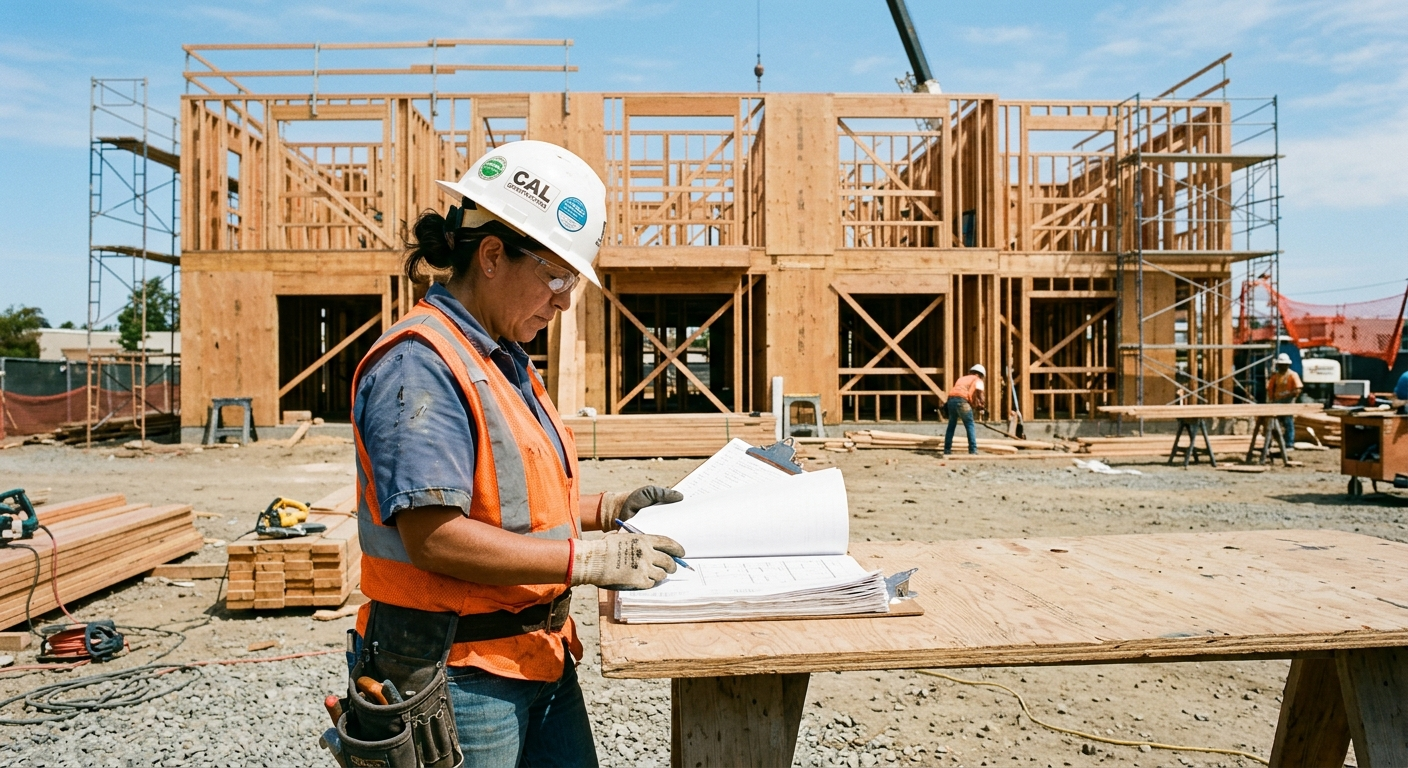
- Construction and general contractors : crews driving to job sites across Contra Costa and Alameda counties, hauling tools and materials. Add the physical-damage exposure of heavy trucks and the liability from a worksite accident, and the risk is substantial. Workers' compensation and commercial auto often go hand-in-hand for contractors; see our workers' comp coverage page for context.
- Real estate and property management : agents and property managers driving to showings, inspections, and maintenance calls in Livermore, Pleasanton, and across the Tri-Valley. Personal auto policies regularly exclude business use, making HNOA coverage important for these operations.
- Landscaping and janitorial services : vehicles carry equipment worth tens of thousands of dollars. Inland marine coverage for the equipment and commercial auto for the vehicle should be coordinated.
- Food and beverage delivery : from Hayward to Berkeley and everywhere in between, delivery drivers face some of the highest accident rates of any commercial use class.
- Healthcare and home health : aides and nurses using personal cars for patient visits generate significant HNOA exposure.
How commercial auto differs from personal auto in California
Personal auto policies written in California include an exclusion for vehicles used primarily in a business capacity. The definition of "business use" varies by carrier, but most draw the line at regular, repeated use for business purposes. Driving your car to the office occasionally is generally covered. Using your pickup truck to haul materials to job sites every day is not, and filing a claim for an accident during business use on a personal policy is likely to result in a denied claim, a cancelled policy, or both.
Beyond the exclusion issue, personal and commercial auto policies differ in several structural ways:
- Named insured : commercial policies list the business entity as the primary insured, allowing multiple drivers to be scheduled on one policy.
- Permissive use : commercial policies define authorized drivers more precisely, because businesses need to control which employees operate covered vehicles.
- Loss payee / additional insured : if your business leases vehicles or has a lender, they typically need to be listed on the commercial policy. Lenders on personal vehicles handle this differently.
- Limits and endorsements : commercial policies can be built with much higher limits and specialized endorsements (cargo coverage, pollution liability, refrigeration breakdown) that personal policies do not offer.
Get the right commercial auto coverage for your California business
Charles Katz Insurance is an independent agency serving businesses across the East Bay and Tri-Valley, including Berkeley, Fremont, Hayward, Livermore, Pleasanton, San Leandro, San Ramon, and Oakley. As an independent agency, we compare commercial auto insurance in California across multiple carriers to find the combination of coverage and price that fits how your business actually operates. We do not work for one insurance company; we work for you.
Whether you need a policy for a single company vehicle, a small fleet, hired and non-owned auto for employees using personal cars, or a full commercial auto program with an umbrella layer on top, our team will walk you through the options without pressure. Call us at 925-484-5900 or reach out through our contact page to get a quote or ask questions about your current coverage. Getting the right policy now costs a fraction of what an uninsured commercial claim costs later.
Get A Quote
At Charles Katz Insurance, securing your future is easy. Ready to protect what matters? Contact us for a quick quote and personalized insurance options!
Kelly
Speak to Kelly 24/7
Microphone ready
Start your custom insurance quote
Instant answers to your insurance questions
Schedule appointments or follow-ups
Personal Insurance
From auto and homeowners to renters and umbrella policies, we help protect your family and property. Let’s find coverage that fits your life.
Commercial Insurance
We customize policies for your industry's risks, like general liability and workers' comp, ensuring you can run your business worry-free.
Contact Charles Katz Insurance
Recent Posts