Landlord Insurance vs Homeowners Insurance in California Guide
Landlord insurance vs homeowners insurance in California: why it matters
If you own a rental property in California, one of the most expensive mistakes you can make is assuming your standard homeowners policy has you covered. Landlord insurance vs homeowners insurance in California is not a minor distinction buried in the fine print. It is the difference between a claim that gets paid and one that gets denied entirely because you were renting out a property on the wrong policy. Whether you own a single-family rental in Pleasanton, a duplex in Hayward, or a small apartment building in Fremont, understanding which coverage applies to your situation is one of the most practical steps you can take to protect your investment.
What homeowners insurance actually covers
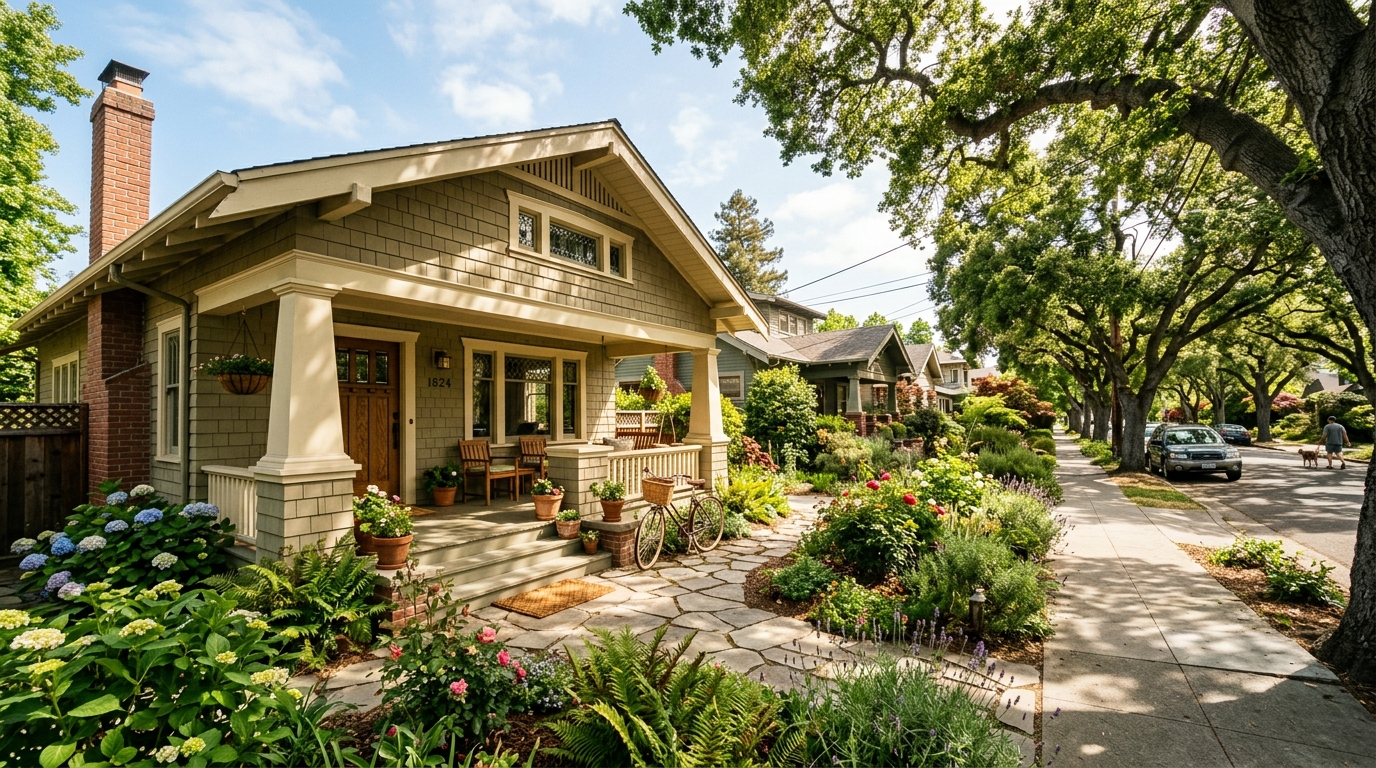
A standard California homeowners insurance policy is designed for owner-occupied properties. The insurer assumes you live in the home full time, and that assumption shapes everything about how the policy is written.
The core protections
- Dwelling coverage : pays to repair or rebuild the physical structure if it is damaged by a covered peril like fire, wind, or vandalism.
- Personal property : covers your furniture, appliances, clothing, and other belongings inside the home.
- Liability protection : helps pay for legal costs and medical bills if someone is injured on your property and sues you.
- Additional living expenses (ALE) : pays for a hotel or temporary rental while your home is being repaired after a covered loss.
These coverages make sense when you are the one living in the house. Personal property coverage protects your belongings. ALE pays for you to live somewhere else. The liability limit is calibrated to a homeowner's risk profile, not a landlord's.
Where homeowners coverage breaks down for rentals
The moment you move out and start collecting rent, most homeowners policies either exclude coverage or reduce it significantly. Some policies void coverage entirely if the home is tenant-occupied for more than 30 to 60 days. Others will cover the structure but exclude liability arising from your role as a landlord. Personal property coverage becomes largely irrelevant because your belongings are no longer in the home. And ALE is designed for you, not your displaced tenants.
California insurance carriers are not required to cover a property being used in a materially different way than what was disclosed on the application. Renting the property out changes the risk, and most policies reflect that.
What landlord insurance covers
A landlord insurance policy(sometimes called a rental dwelling policy or dwelling fire policy) is built specifically for properties you own but do not occupy. It replaces the homeowners framework with one that fits your actual situation as a property owner and landlord.
Key components of a landlord policy
- Rental dwelling coverage : protects the structure itself, including built-in appliances, against covered perils. This is the core of the policy.
- Landlord liability : covers you if a tenant or visitor is injured on the property and holds you responsible. This is often written at higher limits than a standard homeowners policy because courts frequently treat landlords differently than homeowners.
- Loss of rental income : pays the rent you would have collected while the property is being repaired after a covered loss. This is the landlord equivalent of ALE, and it is one of the most valuable coverages on the policy.
- Other structures : covers detached garages, fences, and storage units on the property.
- Optional landlord contents : if you leave appliances or furnishings in the unit, you can add coverage for those specific items.
What landlord insurance does not cover
Landlord policies do not cover your tenants' personal belongings. That is what renters insurance is for, and many California landlords now require tenants to carry it. Landlord policies also generally exclude flood damage (which requires a separate flood policy) and earthquake damage (a significant gap in California that deserves its own conversation). Routine maintenance issues and intentional damage by tenants may also fall outside coverage, though some carriers offer optional tenant damage endorsements.
Side-by-side comparison: landlord vs homeowners
- Who it is for : homeowners covers owner-occupied homes; landlord covers tenant-occupied rentals.
- Personal property : homeowners covers your belongings broadly; landlord covers only items left for tenant use, and only if that coverage is added.
- Liability : both include liability, but landlord policies are written with rental-specific risks in mind and typically carry higher limits.
- Loss of income : homeowners has no equivalent; landlord policies include loss of rental income for covered repairs.
- Tenant belongings : neither covers them. Tenants need their own renters policy.
- Cost : landlord policies typically run 15 to 25 percent more than a comparable homeowners policy, reflecting the higher liability exposure and income-replacement feature.
That cost difference is worth it. A covered loss that knocks out three months of rent at $2,500 per month means $7,500 in lost income. Without loss of rental income coverage, that comes straight out of your pocket while you are still paying the mortgage.
California-specific considerations for rental property owners
California adds layers of complexity that landlords in other states do not face. A few of these directly affect your insurance decisions.
Wildfire risk
If your rental property is in or near a high fire-hazard severity zone, finding coverage can be genuinely difficult. Many standard carriers have pulled back from writing new policies in parts of Contra Costa County, Alameda County, and surrounding areas. The California FAIR Plan is often the insurer of last resort for rental properties in these zones, though it provides basic fire coverage only and needs to be supplemented with a separate Difference in Conditions (DIC) policy for broader protection. This is a real challenge for landlords in communities from Livermore to the Oakland Hills area.
Earthquake exposure
Standard landlord policies, like homeowners policies, do not cover earthquake damage. California sits on some of the most seismically active land in the country, and the Bay Area is no exception. A moderate quake can cause serious structural damage to a rental property. If you own rental properties in the East Bay or Tri-Valley, earthquake coverage is worth a serious conversation with your agent.
Flood exposure
Flood damage is excluded from both homeowners and landlord policies. Given California's recent history with atmospheric rivers and flash flooding, landlords with properties near creeks, low-lying areas, or historically flood-prone streets should look into a separate flood policy. Options exist beyond the National Flood Insurance Program (NFIP), including private flood carriers that may offer better rates or higher limits.
Short-term rentals are a different category
If you are renting through Airbnb or VRBO, neither a standard homeowners policy nor a traditional landlord policy is built for that situation. Short-term rental insurance is a separate product that fills that gap. Some platforms offer limited host protection, but it is rarely comprehensive enough to stand alone. You can learn more about that specific coverage on the short-term rental insurance page.
Tenant discrimination and fair housing
California has some of the broadest fair housing protections in the country. While this is a legal topic rather than a coverage topic, some landlord policies include optional employment practices and discrimination liability endorsements that can help cover defense costs if a tenant files a complaint. It is worth asking about.
Common mistakes California landlords make with insurance
These are situations agents see repeatedly, often after a loss has already occurred.
- Leaving a homeowners policy in place after moving out : the most common error. Some landlords do not realize their policy is void or significantly limited the moment the property becomes tenant-occupied.
- Underinsuring the dwelling : rental property values and construction costs in the Bay Area have risen sharply. A policy written five years ago may carry a dwelling limit that would not come close to covering a full rebuild today.
- Skipping loss of rental income coverage : some landlords choose the cheapest policy and strip out the extras. Loss of rental income is not an extra. It is one of the primary reasons to have a landlord policy in the first place.
- Not requiring renters insurance : if a tenant's negligence causes a fire or water damage, your landlord policy may cover the structure, but you could face a subrogation claim against a tenant who has no assets. Requiring renters insurance protects both parties.
- Ignoring liability limits : California courts can award significant judgments in premises liability cases. A $100,000 liability limit on a rental in a high-cost metro area offers limited protection. Consider pairing your landlord policy with a personal umbrella policy for broader coverage.
How much does landlord insurance cost in California?
Rates vary considerably based on property type, location, construction, age, the coverage limits you choose, and your claims history. As a rough benchmark, a single-family rental home in the East Bay or Tri-Valley might run anywhere from $1,200 to $2,500 or more per year for a solid landlord policy, before adding earthquake or flood coverage. Properties in high wildfire-risk ZIP codes will cost more and may require the FAIR Plan plus a DIC policy, which can push annual costs higher.
Landlord insurance premiums are generally tax-deductible as a business expense for rental property owners. Keep records of your premiums and confirm the specifics with your tax advisor.
Work with Charles Katz Insurance to get the right rental property coverage
Choosing the right policy for your rental property should not come down to price alone, or to whatever coverage you already had in place. The stakes are too high, from potential claim denials to uncovered income losses after a major event.
At Charles Katz Insurance , we are an independent agency serving landlords and rental property owners throughout the East Bay and Tri-Valley, including Pleasanton, Livermore, San Ramon, Hayward, Fremont, and Berkeley. As an independent agency, we work with multiple carriers to compare policies and find coverage that fits your actual situation, whether you own a single rental home or a small portfolio of properties.
If you are not sure whether your current policy is right for your rental, or if you are buying a property and setting up coverage for the first time, we are glad to walk through it with you. Contact Charles Katz Insurance to get started, or call us at 925-484-5900 . We will make sure you have the right policy in place before you need it.
Get A Quote
At Charles Katz Insurance, securing your future is easy. Ready to protect what matters? Contact us for a quick quote and personalized insurance options!
Kelly
Speak to Kelly 24/7
Microphone ready
Start your custom insurance quote
Instant answers to your insurance questions
Schedule appointments or follow-ups
Personal Insurance
From auto and homeowners to renters and umbrella policies, we help protect your family and property. Let’s find coverage that fits your life.
Commercial Insurance
We customize policies for your industry's risks, like general liability and workers' comp, ensuring you can run your business worry-free.
Contact Charles Katz Insurance
Recent Posts