General Liability Insurance for California Small Businesses Explained
What general liability insurance covers for California small businesses
General liability insurance for California small businesses is one of the most foundational coverage decisions you will make as a business owner. A single slip-and-fall at your storefront, a client who claims your work caused property damage, or an advertising dispute can turn into a lawsuit that costs tens of thousands of dollars before you ever set foot in a courtroom. General liability (often called GL or CGL) is the policy designed to absorb those costs so your business can keep running.
A commercial general liability policy covers three broad categories of claims against your business:
- Bodily injury : a customer, vendor, or other third party is physically hurt in connection with your business operations or your products.
- Property damage : your business (or an employee) accidentally damages someone else's property while working.
- Personal and advertising injury : claims of libel, slander, copyright infringement in your advertising, or wrongful eviction.
The policy pays for legal defense costs, settlements, and judgments up to the limits you select. Defense costs alone on a disputed liability claim can easily run $50,000 to $150,000 in California, even when you ultimately win, so the coverage does more than just produce a check at the end of a case.
Why California raises the stakes for small business owners
California has one of the most active plaintiff litigation environments in the country. The state's consumer protection statutes, including the California Consumer Legal Remedies Act and Proposition 65 (the Safe Drinking Water and Toxic Enforcement Act), give plaintiffs legal avenues that do not exist in most other states. A retailer selling a product that contains a listed chemical without proper Prop 65 labeling, for example, can face statutory penalties that stack up quickly.
California also enforces strict premises liability rules. Under California Civil Code Section 1714, property owners and tenants who control a space have a duty to exercise ordinary care in managing that property. If someone is hurt on your business premises, the burden can shift to you to show you took reasonable precautions. That standard makes it easier for plaintiffs to establish liability here than in comparative-fault states with different thresholds.
Jury verdicts in the Bay Area and broader East Bay, including Alameda County and Contra Costa County, tend to run higher than the national average. A slip-and-fall case that might settle for $30,000 in another market can easily demand a six-figure resolution in this region. Your coverage limits need to reflect local reality, not national averages.
How much coverage does a California small business actually need
The most common general liability policy structure has a $1 million per-occurrence limit and a $2 million aggregate limit . The per-occurrence limit is the most the insurer will pay for any single claim. The aggregate is the most it will pay across all claims during the policy year.
Those limits are often the minimum a landlord or general contractor will accept on a certificate of insurance before they will let you lease space or work on a job site. Whether they are the right limits for your specific business is a separate question. Consider these factors:
- Foot traffic volume : a retail shop in Pleasanton or Livermore with hundreds of customers daily carries a different bodily-injury exposure than a home-based consulting firm.
- Contract requirements : construction clients, property managers, and government contracts in California routinely require $2 million per occurrence. Read every contract before you buy.
- Products exposure : if you manufacture, distribute, or sell physical goods, products-completed operations coverage under the GL policy is especially important. One defective product claim can exceed basic limits quickly.
- Business size and revenue : insurers price GL partly on revenue and payroll because higher activity means higher exposure. As your business grows, your limits should grow too.
Many small businesses in California also layer a commercial umbrella policy on top of their GL to get an extra $1 million to $5 million of coverage at a relatively low additional premium. It is one of the most cost-effective ways to protect against a catastrophic verdict.
What general liability does not cover
Knowing where GL stops is just as important as knowing what it covers. Common exclusions include:
- Professional errors : if you give bad advice, make a design mistake, or provide a faulty professional service, GL typically does not cover the resulting claim. That is the job of professional liability insurance(also called errors and omissions).
- Employee injuries : workers' compensation is a separate, mandatory California requirement. GL does not pay for injuries to your own employees.
- Your own property : GL covers damage you cause to other people's property, not damage to your own building, equipment, or inventory. You need commercial property insurance for that.
- Intentional acts : claims arising from deliberate wrongdoing by the business or its owners are excluded.
- Auto accidents : if your employee causes an accident while driving a company vehicle, that falls under commercial auto, not GL.
- Cyber incidents : data breaches and ransomware attacks require a separate cyber liability policy, which is increasingly important for any business that stores customer information electronically.
A GL policy is not a catch-all. It is one layer of a complete commercial insurance program, and gaps in coverage can be just as costly as having no policy at all.
The BOP option: bundling GL with property coverage
If you own or lease physical business space and have equipment, inventory, or furniture to protect, you may be better served by a Business Owners Policy rather than a standalone GL. A BOP bundles general liability and commercial property into a single policy, usually at a lower combined premium than buying each separately.
BOPs are typically available to small and mid-size businesses in lower-risk industries: retail, office-based services, restaurants, contractors with limited exposure, and similar operations. Insurers underwrite them on a simplified basis, which means faster quotes and fewer forms to fill out. Not every business qualifies, but for those that do, a BOP is often the most efficient way to get core coverage in place.
You can read more about how BOPs work and whether your business might qualify on the Business Owners Policy page on this site.
How California contractors and trades use GL certificates
If you are a contractor, subcontractor, or tradesperson working in the East Bay or elsewhere in California, general liability is not just a smart purchase. In practice, it is a prerequisite for working. General contractors and property owners will ask for a certificate of insurance (COI) before the first day of work, and most contracts specify that you must maintain coverage for the full duration of the project plus a tail period after completion.
The "additional insured" endorsement is another term you will encounter regularly. When a GC requires you to name them as an additional insured on your GL policy, they gain the right to be defended under your policy if a claim arises from your work. This is standard in California construction contracts, and not all policies include the endorsement automatically. Confirming it is in place before you start a job matters.
Products-completed operations coverage, which extends protection after a job is finished, is equally important. A roof that leaks two years after installation, or a plumbing repair that fails, can generate a claim long after the check cleared. California's construction defect statutes allow claims for up to ten years on latent defects in some cases, so coverage that ends at project completion leaves a significant gap.
What general liability insurance costs for California small businesses
Premiums vary widely based on industry, revenue, location, claims history, and the limits you choose. Realistic ballpark figures for common business types in California include:
- Office-based professional (consultant, accountant, real estate agent) : roughly $500 to $900 per year for a $1M/$2M policy, often packaged in a BOP.
- Retail store : typically $700 to $1,500 per year , depending on revenue, square footage, and whether products are involved.
- General contractor or trades : premiums are based heavily on payroll and subcontractor costs. A small contractor might pay $1,500 to $4,000 per year , but specialty trades with higher risk (roofing, excavation) pay more.
- Restaurant or food service : expect $1,200 to $3,000 per year or more, and note that liquor service requires a separate liquor liability endorsement or standalone policy.
These are starting points, not quotes. The only accurate number is the one an underwriter produces after reviewing your specific business information. Working with an independent agent means you get those numbers from multiple carriers at once, which is the only way to know whether the first offer you see is actually competitive.
Get the right coverage for your California small business
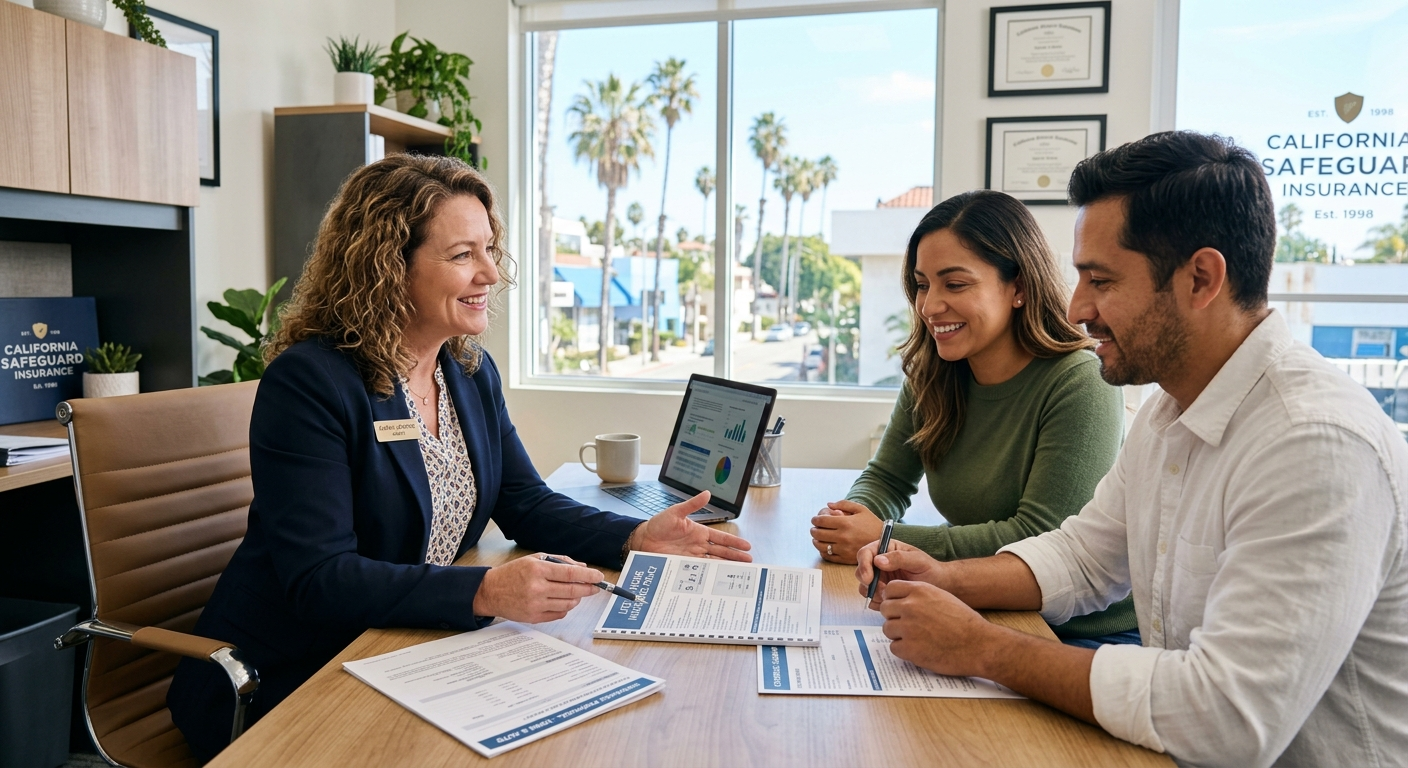
Charles Katz Insurance is an independent agency serving small business owners across the East Bay, including Pleasanton, Livermore, San Ramon, Hayward, Fremont, and the surrounding communities. Because we work with multiple carriers, we compare rates and policy terms on your behalf rather than steering you toward a single company's product. That independence matters when you are trying to find coverage that genuinely fits your business, not just a policy that checks a box.
Whether you are starting a new business, revisiting coverage you have not looked at in a few years, or trying to satisfy a contract's insurance requirements, we can help you understand your options and put together a program that makes sense. You can reach us at 925-484-5900 or visit our contact page to request a quote or ask a question. There is no pressure and no obligation, just a straightforward conversation about what your business actually needs.
For a broader look at the commercial insurance products available through our agency, visit our commercial insurance overview.
Get A Quote
At Charles Katz Insurance, securing your future is easy. Ready to protect what matters? Contact us for a quick quote and personalized insurance options!
Kelly
Speak to Kelly 24/7
Microphone ready
Start your custom insurance quote
Instant answers to your insurance questions
Schedule appointments or follow-ups
Personal Insurance
From auto and homeowners to renters and umbrella policies, we help protect your family and property. Let’s find coverage that fits your life.
Commercial Insurance
We customize policies for your industry's risks, like general liability and workers' comp, ensuring you can run your business worry-free.
Contact Charles Katz Insurance
Recent Posts