Business Owners Policy (BOP) in California: Is It Right for You?
What a business owners policy in California actually covers
A business owners policy in California bundles three core coverages into one contract: commercial property, general liability, and business interruption. Instead of buying each piece separately and managing multiple bills and renewal dates, a small business owner gets a single policy. That simplicity is appealing, but whether the bundle fits your specific operation depends on details most business owners never think to ask about.
A BOP is not a catch-all. It is a carefully scoped product designed for businesses that meet certain size and risk profiles. Understanding what is inside that bundle, what is deliberately left out, and how California's regulatory environment shapes the pricing will help you decide whether a BOP is the right starting point or whether you need something more custom.
The three pillars of a BOP: property, liability, and business interruption
Commercial property coverage
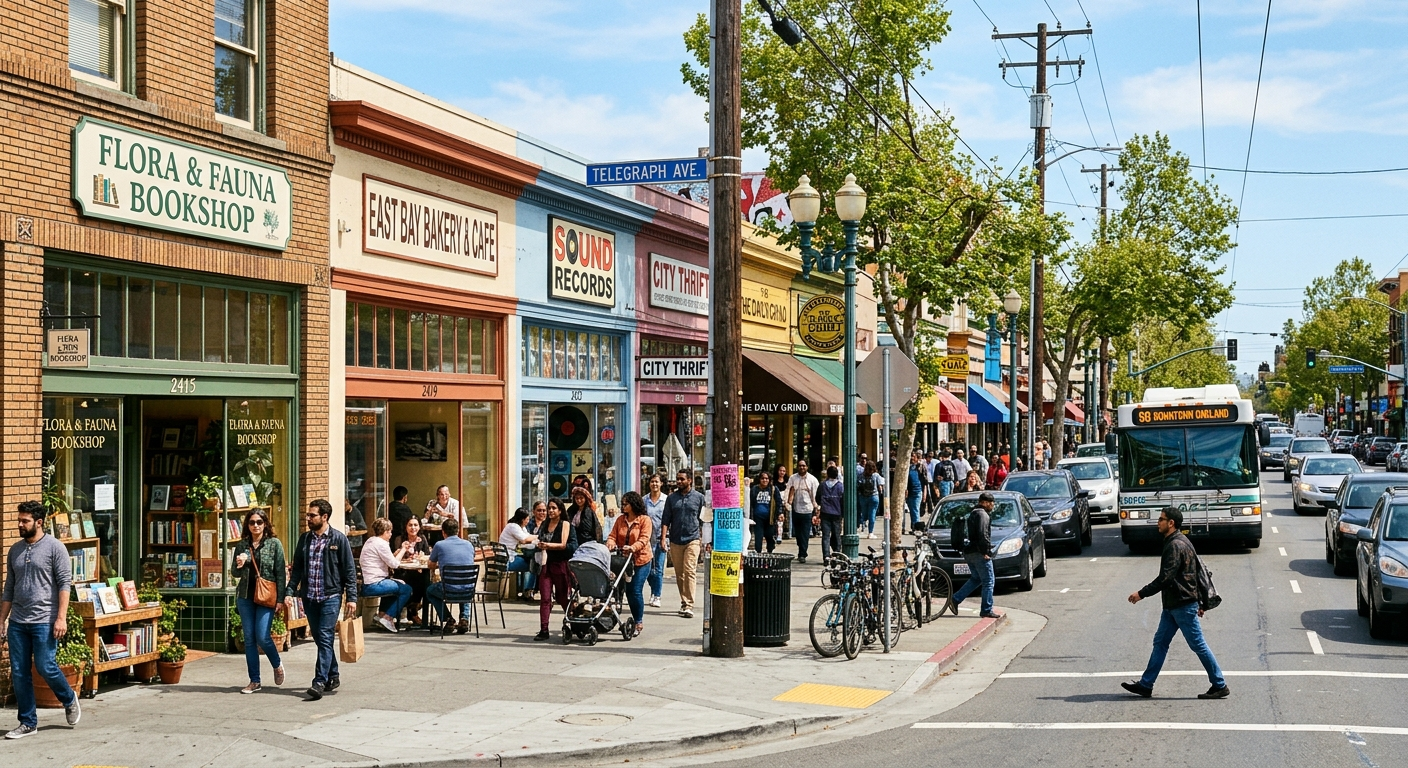
The property portion of a BOP covers your building (if you own it), your business personal property (equipment, inventory, furniture), and sometimes improvements you have made to a leased space. In the East Bay and Tri-Valley, where commercial rents are high and many small businesses operate in leased retail or office suites, the tenant improvements piece is often the most undervalued component. If you have spent $40,000 building out a leased storefront in Pleasanton or Livermore, that investment needs to be listed and valued correctly, or a fire claim could leave you recovering a fraction of what you actually lost.
One thing to watch in California specifically: standard commercial property policies, including those bundled in a BOP, typically exclude earthquake damage. The East Bay sits near several active fault lines, including the Hayward Fault, so earthquake coverage needs to be addressed separately. It will not be inside your BOP.
General liability coverage
The general liability component pays for third-party bodily injury, property damage, and certain personal injury claims (like libel or slander) that arise from your business operations. If a customer slips in your Berkeley boutique, if a contractor damages a client's property on a job site in San Ramon, or if your product causes harm, this coverage responds.
Standard BOP general liability limits start at $1,000,000 per occurrence / $2,000,000 aggregate . Many California landlords and commercial property managers require at least that much before handing over keys. Some industries, and many contracts with larger companies or government entities, require higher limits. If your contracts demand more, you can add a commercial umbrella policy on top of the BOP to extend those limits.
Business interruption coverage
Business interruption, sometimes called business income coverage, replaces lost revenue when a covered event forces you to temporarily close. If a fire destroys your inventory and you cannot operate for three months, this coverage pays your ongoing fixed expenses (rent, payroll, loan payments) and the profit you would have earned during that period.
For California businesses, this component has become more relevant after wildfire events disrupted operations across the state, even for businesses that did not sustain direct fire damage. There are important nuances to how "period of restoration" is calculated and what counts as a qualifying interruption. Our post on California business interruption insurance breaks that down in more detail.
Who qualifies for a BOP in California
Insurers set their own eligibility rules, but most carriers use similar criteria. A business generally qualifies for a BOP if it meets all of the following:
- Revenue under a certain threshold. Most carriers cap BOP eligibility at annual revenues between $1 million and $5 million, though some carriers go higher for lower-risk classes.
- Physical footprint. Buildings with less than 25,000 square feet of total floor area are typical. Large warehouses or manufacturing facilities usually fall outside BOP eligibility.
- Low-to-moderate hazard operations. Retail shops, professional offices, small contractors, restaurants, and service businesses tend to qualify. Higher-hazard industries (auto repair, manufacturing, cannabis, firearms) are often excluded from standard BOP programs and need monoline or specialty coverage instead.
- Premises-based or light service operations. Businesses with significant off-site exposure (like roofing contractors or trucking companies) usually need a standalone commercial package rather than a BOP.
If your business is growing quickly or you work in a regulated industry in California, confirm eligibility at every renewal cycle. A carrier that offered you a BOP when you were a $600,000 revenue shop may not renew it at $2 million with additional employees.
What a BOP does not cover (and what California businesses often need to add)
The gaps in a BOP are just as important as what is inside it. These are the most common exposures that require separate coverage for California small businesses:
- Workers compensation. California law requires workers comp coverage for any business with even one employee. It is never included in a BOP and must be purchased separately. Penalties for non-compliance are steep, including stop-work orders and personal liability for business owners.
- Professional liability (errors and omissions). If your business provides advice, design, consulting, or any professional service, claims of negligence or failure to perform are excluded from a BOP's liability section. A professional liability policy fills that gap.
- Commercial auto. Vehicles owned by your business are not covered under a BOP. You need a separate commercial auto policy. If your employees use personal vehicles for business errands (deliveries, client visits), hired and non-owned auto coverage is also worth adding.
- Cyber liability. A BOP provides no meaningful protection against data breaches, ransomware, or business email compromise. California has some of the strictest data privacy laws in the country under the CCPA. If you store any customer data, this coverage is no longer optional.
- Earthquake. As noted above, standard property coverage including BOP property excludes earthquake. With the Hayward Fault running directly through the East Bay, this is a real exposure for businesses in Hayward, Fremont, Berkeley, and Oakland.
- Flood. Flood is likewise excluded from standard commercial property and BOP. Businesses near creeks, low-lying areas, or in FEMA flood zones in Livermore or the Tri-Valley should look at commercial flood coverage separately.
- Employment practices liability (EPLI). California has aggressive employee-protective statutes. Claims of wrongful termination, harassment, or discrimination are not covered by a BOP and can be expensive. EPLI is a separate line that many California employers should carry.
How BOP pricing works in California
A BOP is generally one of the most affordable ways for a small business to get solid foundational coverage. Annual premiums for low-hazard businesses, a small retail shop or a two-person consulting firm, can run as low as $500 to $1,500 per year . A restaurant with a dining room, a contractor with employees, or a business in a higher-value building will see significantly higher premiums.
Several factors drive the price of a business owners policy in California :
- Business class (industry type). This is the single biggest driver. Restaurants, contractors, and auto-adjacent businesses pay more than accountants or graphic designers.
- Location and building construction. Fire risk in California is a real rating factor. A wood-frame building in a high wildfire-risk ZIP code will cost more to insure than a masonry building in an urban area with a fire station nearby.
- Revenue and payroll. Insurers use these as proxies for exposure. More revenue generally means more customers, more claims potential, and higher premium.
- Claims history. Three or more claims in five years can make a business difficult to insure in the standard market.
- Deductible election. Choosing a higher property deductible lowers premium. Most carriers offer deductible options from $500 up to $5,000 or more.
- Optional endorsements. Each add-on (equipment breakdown, hired auto, data breach, spoilage for restaurants) adds to the base premium but expands protection.
Because BOP pricing varies substantially across carriers, comparing quotes from multiple insurers is how independent agents routinely save clients 15% to 30% on equivalent coverage. Carriers price industry classes differently. One insurer might be very competitive for a Livermore landscaping company and expensive for a San Ramon IT firm. Only a market-by-market comparison tells you where you actually land.
BOP vs. a commercial package policy: knowing the difference
A BOP is a pre-packaged product with locked-in coverage combinations. A commercial package policy (CPP) is a more flexible structure that lets you combine monoline coverages in any configuration your business needs. A BOP is a set menu; a CPP is ordering a la carte.
For most businesses under 10 employees with straightforward operations, a BOP is the right answer. It is priced competitively, easy to administer, and covers the core risks. As a business grows, adds employees, expands to multiple locations, or takes on higher-risk operations, the CPP structure often becomes the better fit.
An experienced agent will tell you when you have outgrown a BOP and what a custom package would look like. Some agents only have access to BOP markets and never flag when a client needs something different. That is one practical reason to work with an independent agent who has access to multiple carriers and program types.
If you want to review what a full commercial insurance program looks like beyond the BOP, our commercial insurance overview covers the full range of coverages available for California businesses.
How to decide if a BOP is right for your California business
Run through these questions honestly:
- Do you have business-owned property to protect? Physical inventory, equipment, or leasehold improvements. If yes, the property component of a BOP directly applies.
- Do customers, vendors, or the public come into contact with your operations? In person, via your products, or through your services. If yes, general liability is not optional.
- Could your business survive three to six months with zero revenue? If not, business interruption coverage is worth the premium.
- Are you in a qualifying industry and revenue range? If you are not sure, an agent can check eligibility across multiple carriers in minutes.
- Do you have additional exposures (employees, vehicles, professional services, customer data)? List them and make sure each has a home in your coverage program. A BOP alone will likely not cover all of them.
For most small California businesses, a BOP is a smart foundation, but it is rarely the complete answer. The value is in building out the program correctly from that foundation.
Talk to Charles Katz Insurance about your coverage options
Charles Katz Insurance is an independent agency serving businesses across the East Bay and Tri-Valley, including Livermore, Pleasanton, San Ramon, Hayward, Fremont, and Berkeley. As an independent agency, we shop your coverage across multiple carriers to find the right combination of price and protection for your specific business, not just the first BOP that fits on a spreadsheet.
Whether you are a first-time business owner trying to understand what you actually need, or an established business wondering if your current coverage has kept pace with your growth, we are glad to walk through it with you. Call us at 925-484-5900 or contact us online to start a conversation. There is no obligation and no sales pressure, just a straightforward look at what makes sense for your situation.
Get A Quote
At Charles Katz Insurance, securing your future is easy. Ready to protect what matters? Contact us for a quick quote and personalized insurance options!
Kelly
Speak to Kelly 24/7
Microphone ready
Start your custom insurance quote
Instant answers to your insurance questions
Schedule appointments or follow-ups
Personal Insurance
From auto and homeowners to renters and umbrella policies, we help protect your family and property. Let’s find coverage that fits your life.
Commercial Insurance
We customize policies for your industry's risks, like general liability and workers' comp, ensuring you can run your business worry-free.
Contact Charles Katz Insurance
Recent Posts